
Coping Skills Corner: Sensory Grounding
Disclaimer: The information on this blog is for educational and informational purposes only and is not intended as, nor should it be considered, mental health advice or a substitute for professional diagnosis or treatment. Using this blog does not create a therapist-client relationship. Always seek the advice of your qualified mental health provider with any questions you may have.
You may have had the experience of getting so deeply pulled into an emotion, memory, or thought, that it feels impossible to escape and get back to the present moment. This could look like feeling disconnected from yourself, things around you feeling unreal, or feeling like you are reliving something awful that happened to you in the past. Or it could feel like your thoughts are going so fast you can’t catch them, having feelings of panic, or feeling like your head is spinning. If this sounds like you, the coping tool we’re talking about here may be helpful. Try it on for size and see if it fits for you.
Five Senses Grounding Tool
This coping tool helps us to regulate our emotions by connecting us with our sensory experiences. By intentionally redirecting our attention to our senses, we can break the loop of intrusive thoughts, images, and intense emotions, and connect to the present moment. We’ll cover a couple ways to use this tool, and you can try out any of these methods or create your own. The core element is using our senses to connect with the here and now.
Method #1: use in a comfortable, familiar environment and take your time
This approach is the one I use the most with clients during sessions, especially as a telehealth therapist who sees clients from their homes. You may find it more practical to use in a comfortable environment like your home, in nature, or wherever else feel comfortable to you.
Look around and name 5 things you can see. Say it out loud if you can, and describe elements like shape, size, or color.
Notice 4 things you can touch or feel. This could be the temperature, the air on your skin, your clothes, what you’re sitting on, a pet, or a fidget, to name a few examples. Scroll down for some of my favorite fidgets.
Name 3 things you can hear. Some examples are the sound of a fan, your breathing, music playing in the background, or silence.
Notice 2 things you can smell. If there’s nothing readily apparent here, you may have to hunt around a bit. Some popular options I often encounter are the smell of a beverage or snack, the smell of a pet (good or bad smells), a candle, or essential oil.
Notice 1 thing you can taste. This is another one you may have to intentionally create. If possible, go for a strong flavor that alerts your senses.
With practice, this can become so automatic you don’t even have to think about it, it’s just muscle memory. You can always skip steps, change the numbers, or modify it in any other way that fits you, as long as you’re still using the basic template of connecting with your senses. For example, you may not be able to or want to use the smell sense if you have a cold, or if your cat just used the litter box. Adapt it to your needs at this moment.
Method #2: Build a sensory grounding kit + Extra portable and discreet options
If you carry a purse or shoulder bag, usually have pocket space, and find yourself frequently needing to use this tool, this might be a good option for you. You’ll need a small pouch like a coin purse or a small makeup bag, or even a reusable ziplock style bag could work. If you plan to have a smaller space to use like a pocket on your pants, you can skip the pouch.
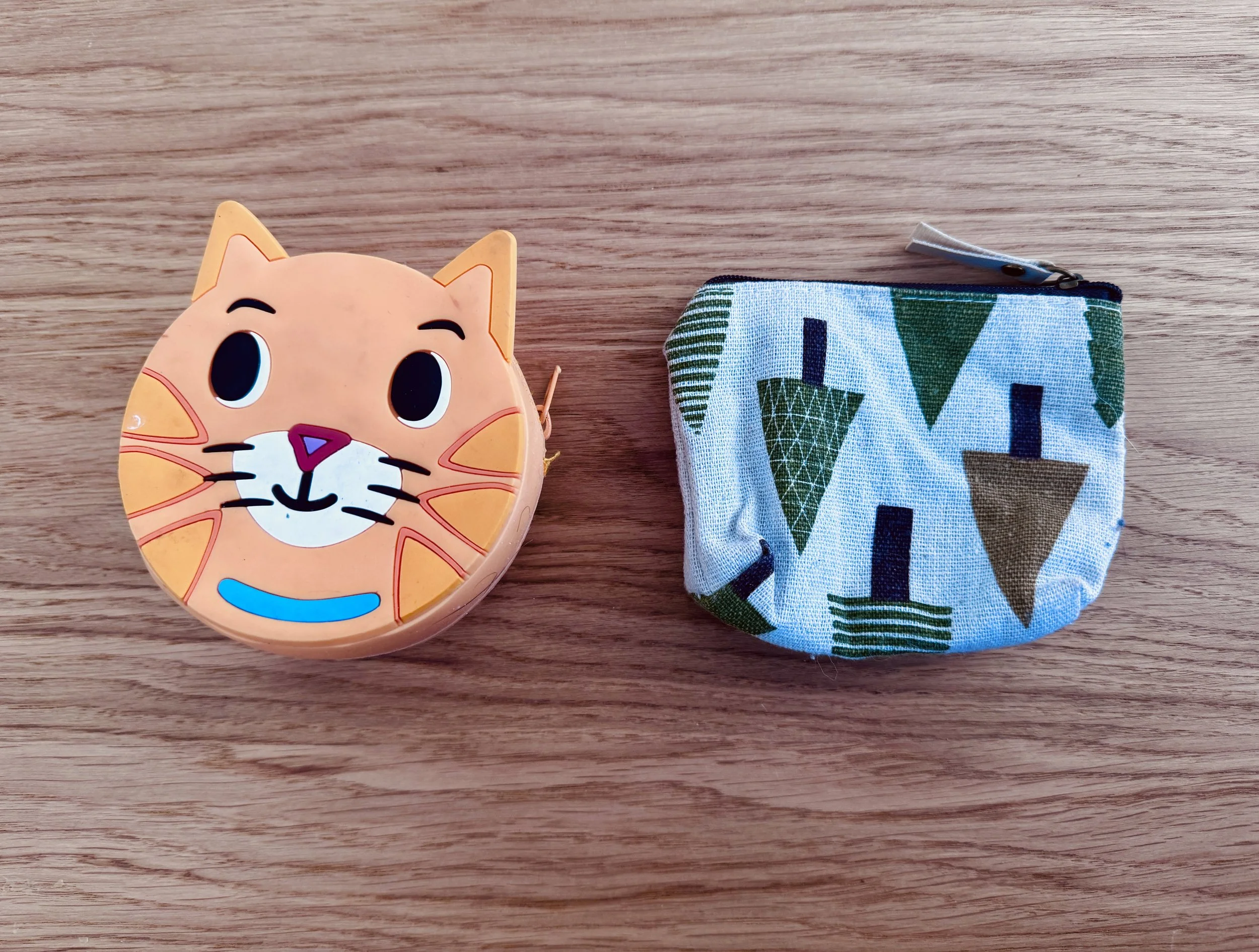
two small pouches, one that is cat shaped and bright yellow, and the other with images of trees on a white background
Next, going through each sense, add things to your pouch that feel good to you. If you’re just using your pockets, pick one or two objects that involve multiple senses. If you don’t have pockets, is there something wearable you could use for this purpose? Unless you have sensory impairments, you will be able to see and touch each item. Maybe one item also makes a distinctive sound, or has a scent to it. In this case, you would have at least a few senses activated by one item. Don’t get hung up on the numbers for each sense, or making sure you involve all five even if some senses don’t do much for you- just try to involve at least a few senses and use what feels good to you.
Here are some of my favorite sensory items:
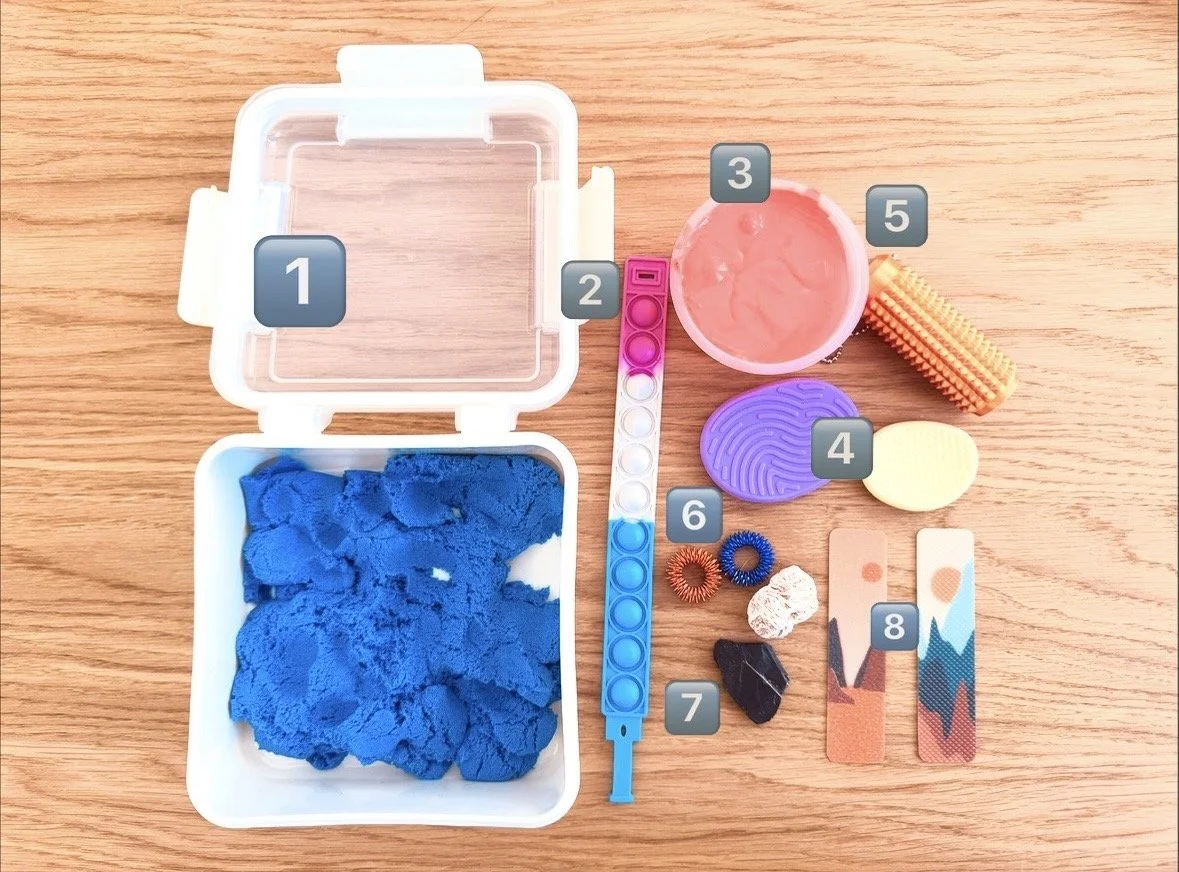
Sensory fidgets, described in text below
Pictured here:
Kinetic sand in my favorite color (this is more of a use at home kind of thing, given its size and potential for mess). Sight, touch. I’ve seen some scented kinetic sand as well, so you might be able to pull in this sense too.
Pop it fidget (bonus for trans pride colors!) Sight, touch, sound.
Physical therapy putty that’s extra strong. Silly putty also works well. Sight, touch, sound, and possibly smell.
These purple and yellow oval shaped objects are silicone, textured discs, and I got these in a multi-pack with several sizes and different textures. Sight, touch.
A spiky, cylindrical fidget. (Try searching “spiky fidget” to find this for purchase). This one is especially helpful if you tend to dissociate, or struggle with urges to self-harm. It can be added to a key ring as well. Sight, touch.
Spiky fidget rings. Helpful for similar purposes as the other spiky fidget listed here. These typically come in a large pack of 50-100, so if you get these and have too many, you can share with friends. They do tend to break easily if you stretch it too much, and can be lost pretty easily as well, so I’d recommend saving some as a backup for yourself. Sight, touch.
Stones. I picked a couple stones with different textures and stories behind them. If you’re into crystals and gemstones, you could even choose some that have a special meaning. Sight, touch.
Sensory strips/stickers. These are pretty discreet and easy to apply to a phone case, water bottle, or laptop. This also came in a multi-pack with different textures and patterns. Sight, touch.
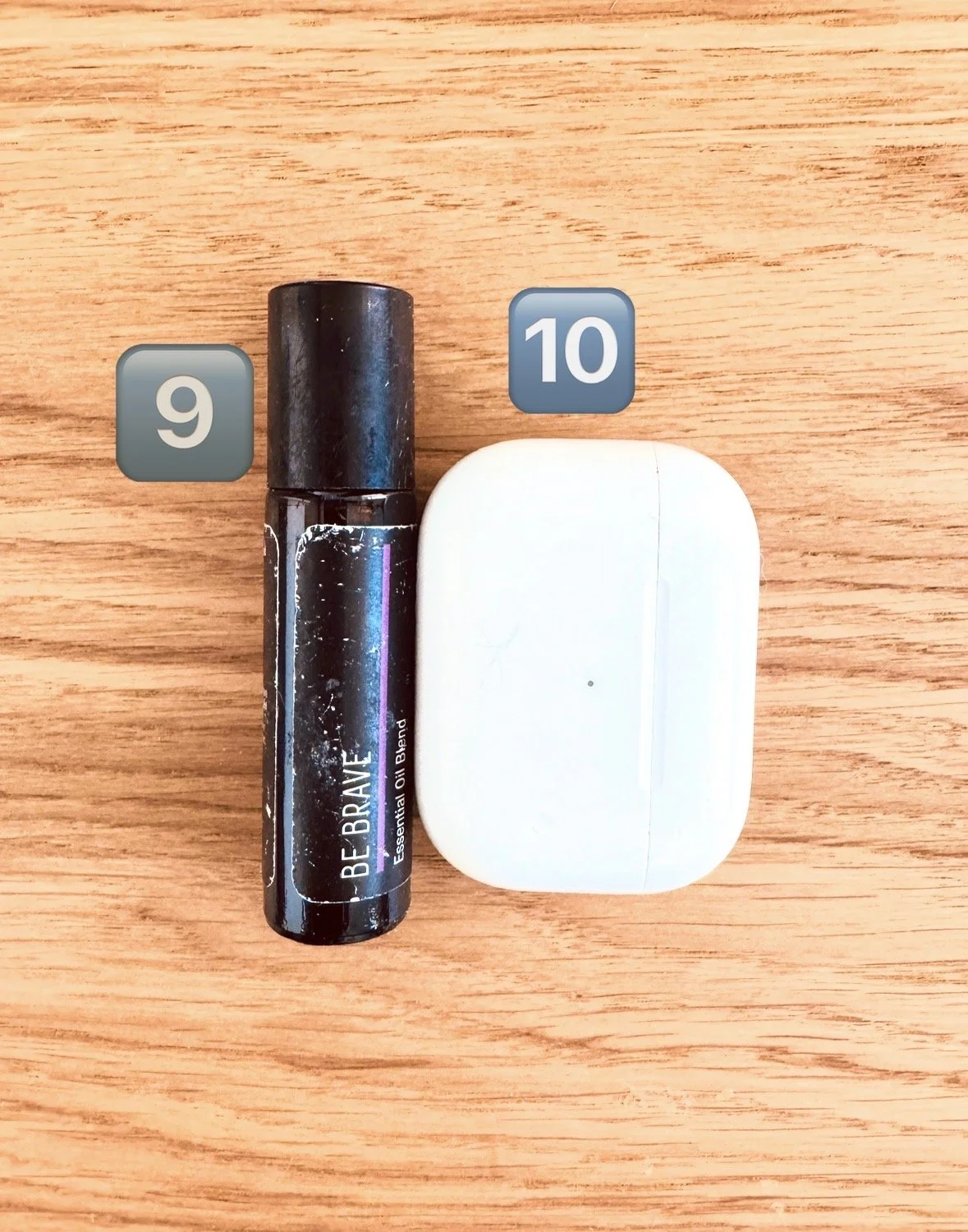
Bottle of essential oil and airpods in case
9. Essential oil roller. A regular bottle works well too, but I like the roller because there’s less risk of a spill, and it’s easy to apply to your skin. You could also apply a few drops of an essential oil to a paper towel or a cleaning cloth for glasses and put that in the pouch to hold the scent. Smell, sight, touch.
10. Airpods. You could use any headphones of your choice or silicone ear plugs to either block out sounds or listen to sounds of your choosing. Try out different sound experiences and see what feels best for you. Some people feel overstimulated by sound, and need something that blocks it out, so that could be using a white noise app or using noise canceling mode on your headphones. Others may seek sound stimulation, and this could look like having a playlist, a favorite podcast or audiobook, or even videos or audio you’ve created, like an audio message from your best friend, or the sound of your cat purring. Sound, sight, touch.

Hard candy and gum
Hard candy or gum. Something strong is best, whether it’s sour, spicy, or minty. This could be atomic fireballs, warheads, jolly ranchers, lemon drops, spearmint gum, or mints, to name a few. Taste, sight, possibly smell and sound.
Connecting with our senses can be an anchor to the present moment, and it can help pull us out of distressing images, memories, thoughts, and feelings. Getting grounded can help keep us safe, and help us to be able to act in ways that align with our values. Allow yourself to get curious, and play around with this to see what works best for you.