
Anxiety
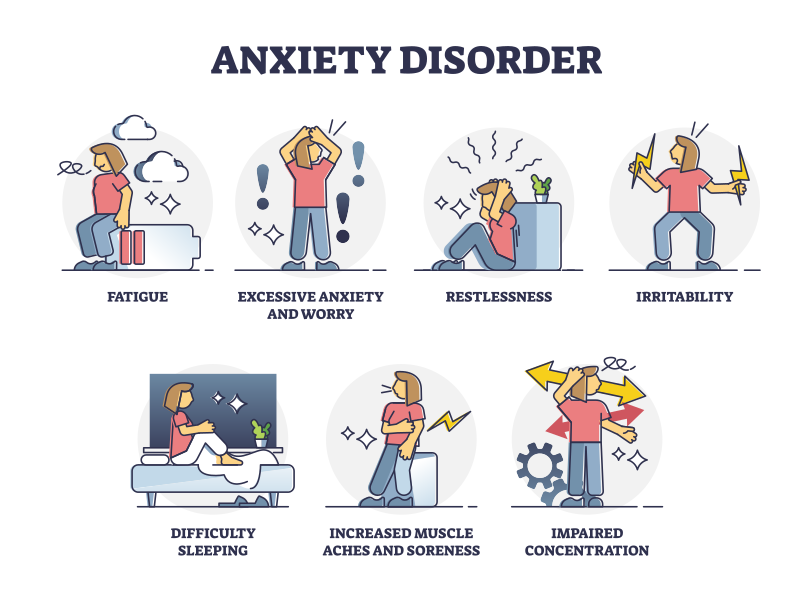
Do you often feel restless, agitated, or overwhelmed with worries and thoughts of what might go wrong? Anxiety can interfere with your ability to succeed at work or in school, sabotage family life, challenge romantic relationships, and make for difficult interpersonal interactions.
Key points
Different people experience anxiety in different ways
Anxiety tends to respond well to treatment
You can learn to recognize the symptoms of anxiety
Choose an effective treatment path for anxiety
Understanding anxiety: You're not alone
Do you often feel uneasy, drained, or stuck in your relationships? Do racing thoughts or self-doubt take over, making it hard to concentrate or relax? If you find yourself constantly overthinking or feeling like something just isn’t right, you might be dealing with anxiety. The good news? Anxiety is highly treatable, and you don’t have to go through it alone.
Anxiety is more common than you might think
More than 20% of adults in the U.S. experience an anxiety disorder each year. Even before the pandemic, anxiety levels were climbing and the disruption and isolation of recent years have only made things harder. Studies have shown a measurable drop in overall emotional well-being across the country, and many people are still feeling the ripple effects today.
With fewer social connections, more screen time, and the pressure to constantly stay “on,” it’s no wonder anxiety has become a near-constant companion for so many. Sometimes we cope by overworking, numbing out, or trying to push through. But real support can help break the cycle.
When anxiety takes hold, it often sticks around
Anxiety serves a biological purpose. It helps us respond to threats and deadlines. But when the stress doesn’t let up, or when we feel unsafe over long periods, our nervous system can stay stuck in high alert. Over time, this can lead to patterns of fear, avoidance, or chronic tension that feel hard to shake.
Without tools to regulate and reset, the mind and body can keep looping through anxiety—even when the original stressor is long gone.
Different kinds of anxiety, different experiences
Anxiety shows up in many ways, and no two people experience it the same. Some common types include:
Generalized Anxiety Disorder (GAD): A persistent sense of worry or dread, often paired with tension, sleep problems, fatigue, or difficulty concentrating.
Social Anxiety: Feeling intense fear or self-consciousness in social situations, from speaking up in meetings to attending gatherings or even leaving the house.
Panic Attacks: Sudden waves of fear with physical symptoms like rapid heartbeat, dizziness, chest tightness, or shaking.
Phobias: Strong fears tied to specific triggers (like flying, heights, or small spaces) that feel overwhelming or irrational.
Whatever form your anxiety takes, you deserve support that meets you where you are.
What causes anxiety?
Anxiety doesn’t just come out of nowhere. It often arises from a mix of genetic predisposition, life experiences, and physical factors. A family history of anxiety or trauma, ongoing stress, chronic illness, or even high caffeine intake can increase your vulnerability. Anxiety can also be linked to medical conditions like thyroid issues or heart irregularities.
You don’t have to manage it all by yourself
Anxiety can make the world feel smaller, heavier, and more exhausting. But healing is possible. With the right support, you can learn how to settle your nervous system, challenge unhelpful thoughts, and reconnect with what brings you peace.
Let’s work together to create space for more ease, clarity, and connection in your life.
Reach out today to get started.
More information
Anxiety Disorder. National Institute of Mental Health. https://www.nimh.nih.gov/health/statistics/any-anxiety-disorder
Henning, M., Subic-Wrana, C., Wiltink, J., & Beutel, M. (2020). Anxiety Disorders in Patients With Somatic Diseases. Psychosomatic Medicine.
Nelson, H., Cantor, A., Pappas, M., & Weeks, C. (2020). Screening for Anxiety in Adolescent and Adult Women. Annals of Internal Medicine.
What’s the difference between stress and anxiety? American Psychological Association. https://www.apa.org/topics/stress/anxiety-difference